The Shape of Rkatsiteli
Each spoke runs from delicate (centre) to pronounced (edge). Tap a benchmark to lay a familiar grape over the top.
More About Rkatsiteli
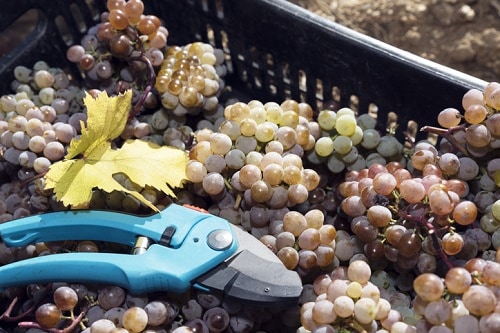
Rkatsiteli (ruh-KAT-see-TELL-ee) is one of the oldest grape varieties in the world. It is a Vitis vinifera vine that originates from the country of Georgia, primarily the Kakheti region, and can be traced as far back as 3000 B.C., when it may have been known as “Kukura.” The name Rkatsiteli literally means “red stem” or “red horned” due to the color of the stems of the vine.
Terroir
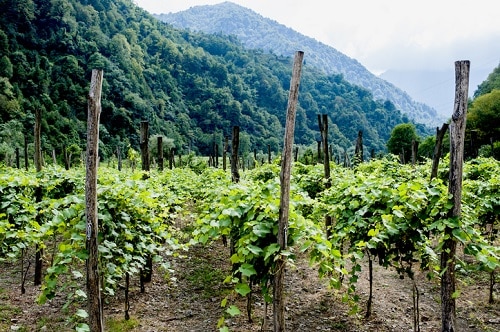
Rkatsiteli is a pale skinned white grape that is mostly planted throughout Georgia and surrounding Eastern European countries such as Bulgaria, Romania, Moldova, Ukraine, and even Russia. In fact, at one point, this grape comprised 18% of all Soviet wine. There are small plantings in the New World regions in Australia and in the eastern United States regions of the Finger Lakes in New York, Massachusetts, New Jersey, Virginia, and North Carolina. Dr. Konstantin Frank was the first to plant Rkatsiteli in the Finger Lakes region of New York in the 1950s and 1960s during his experimentation with the vines. There have even been experimental plantings in California and Colorado. Across the world in China, the grape is known as “Baiyu.”
RELATED: Learn About Other Grape Varieties and Visit Wineries with the Free Winetraveler App
Because the Rkatsiteli grapes maintain high acidity throughout the growing season, they are known to do quite well even in the most humid summers when other grapes may fall “flat” in structure. Many producers will choose to pick the grapes later in the season to ensure that sugar levels have risen enough to balance the grape’s naturally high acidity. Rkatsiteli vines grow well in clay and loamy soils but have also been found in volcanic ash and limestone. It is a hardy vine that can withstand cold winters and also has some fungal resistance and protection against phylloxera.
Rkatsiteli Tasting Notes
This grape can be used in a variety of styles of wine from dry single varietal whites to fortified Sherry-style wines, sweet dessert wines, and even sparkling wines. In the glass, Rkatsiteli wines are known to have spicy and flora aromas, with flavors of lime, fennel, tropical fruits, and honey. It is a wine with high acidity and oftentimes higher alcohol.
Food Pairing
When it comes to food pairings, the wine can be quite versatile depending on which style of Rkatsiteli you are drinking. The dry wines can be considered good “picnic wines” and pair well with foods from the regions where it grows in Eastern Europe and the Middle East. Think in terms of Lebanese, Turkish, Iranian, and even Indian spiced meats and lentils. These wines also pair nicely with fish, poultry, and oysters. More off-dry styles of the wine will go well with spicier foods such as Thai or other spicy Asian dishes.
Learn About These Other Wine Grape Varieties
Jacqueline Coleman is a professional wine + travel writer, wine judge, columnist, and consultant based in Miami, FL.
Taste Rkatsiteli at the Source
Rkatsiteli is tied to a handful of regions. Explore each as a travel destination — with wineries, tours and guides.
Dr. Konstantin Frank Winery
Dr. Konstantin Frank Winery is one of the most prestigious and beloved wineries in the Finger Lakes. The winery’s founder, Dr. Konstantin Frank introduced vinifera (classic European grape varieties) to the region starting a winemaking ...
Explore Dr. Konstantin Frank Winery →Wineries Known for Rkatsiteli
Estates specializing in Rkatsiteli, open for tastings.
Rkatsiteli: Frequently Asked Questions
What does Rkatsiteli wine taste like?
Rkatsiteli offers bright green-apple and quince flavors with notes of white peach, citrus and subtle floral or spice tones. This Georgian white shows crisp, high acidity and a distinctive minerality. Traditional qvevri skin-contact versions add tannin, orchard-fruit intensity and honeyed, nutty complexity.
Is Rkatsiteli sweet or dry?
Rkatsiteli is usually made dry, defined by its naturally high acidity and crisp, refreshing profile. It occasionally appears in off-dry or dessert styles, but the classic Georgian and Eastern European expressions are firmly dry, showing green-apple freshness rather than noticeable sweetness.
What food pairs well with Rkatsiteli?
Rkatsiteli's high acidity pairs beautifully with Georgian dishes like khachapuri and khinkali, plus grilled fish, roast chicken and pork. It complements walnut-based sauces, fresh herbs, tangy cheeses and vegetable dishes. Skin-contact amber styles also handle spicier, richer fare confidently.
What wines are made from Rkatsiteli?
Rkatsiteli produces crisp dry white wines, traditional amber qvevri skin-contact wines, sparkling wines and fortified or dessert styles. One of the world's oldest grapes, it is vinified across Georgia, Russia, Ukraine and Bulgaria, ranging from fresh modern whites to ancient orange styles.
Where is Rkatsiteli grown?
Rkatsiteli originates in Georgia, especially the Kakheti region, and remains its flagship white grape. It is also widely planted across Russia, Ukraine, Moldova, Bulgaria and Armenia, with smaller plantings in the United States, notably New York's Finger Lakes and Virginia.
How should you serve Rkatsiteli?
Serve fresh Rkatsiteli chilled, around 45-50°F, to highlight its crisp acidity and orchard-fruit character. Amber qvevri versions show best slightly warmer, near 55°F, in a larger glass that reveals their tannic, textured, honeyed complexity. Drink most versions young.